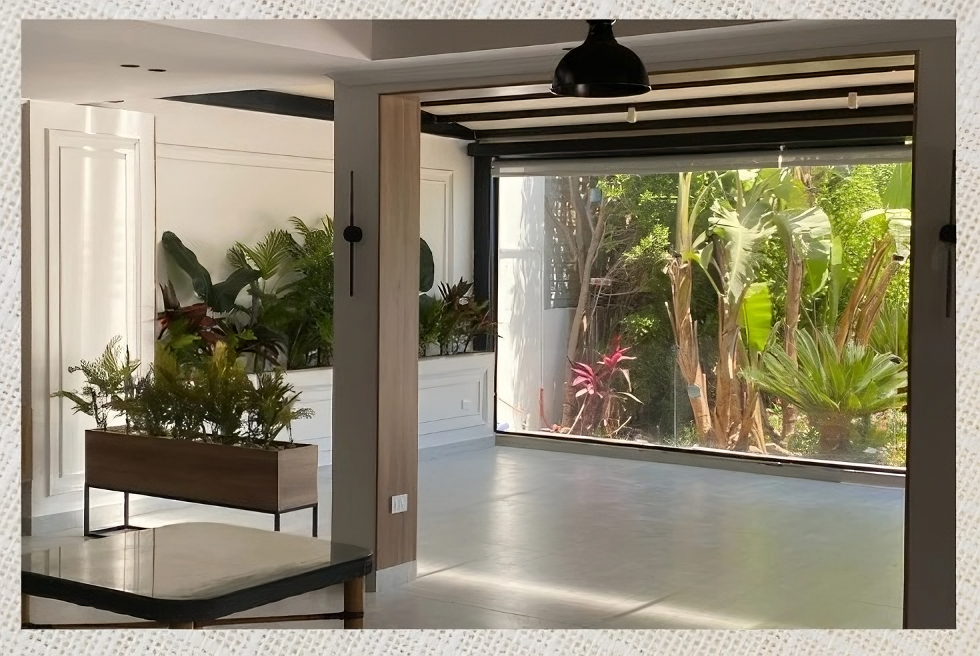
The Lifecycle Imperative of Landscaping Materials
In the rigorous pursuit of sustainable urban development across Egypt, industry focus often narrows exclusively to the operational conservation of water and energy. However, true environmental stewardship requires a holistic, systemic approach to the built environment, encompassing the full lifecycle of all physical materials utilized in a project from extraction to end-of-life disposal. For architects, interior designers, and urban planners curating commercial spaces, public plazas, and luxury residential compounds, the technical specification of decorative planters represents a critical intersection of structural engineering, aesthetic design, and environmental responsibility.
The Egyptian market for recycled materials is expanding rapidly, driven by heightened environmental awareness and evolving government regulations. The plastic recycling sector alone was valued at over $380 million in 2024, handling approximately 1.5 million tons of recycled plastic, and is projected to grow significantly as state policies increasingly penalize single-use waste and promote the National Solid Waste Management Programme (NSWMP). By actively specifying products manufactured from recycled materials, real estate developers and designers participate directly in the circular economy, diverting massive volumes of waste from overburdened landfills and drastically reducing the carbon emissions associated with extracting and processing virgin petrochemicals.
Choosing an inappropriate material for a high-traffic public space or an exposed rooftop installation in cities like Cairo, Alexandria, or the New Administrative Capital can lead to premature structural degradation, exponentially increased maintenance costs, and ultimately, unnecessary landfill waste. Therefore, rigorously evaluating the lifecycle, durability, and infinite recyclability of planter materials is paramount for any sustainable project.
Strategic Material Specification for Extreme Environments
The industry standard for eco-friendly, high-performance planters revolves around three primary material categories, each offering distinct structural and environmental advantages tailored for Egyptian architectural projects.
1. Recycled Resin (Linear Low-Density Polyethylene – LLDPE) Resin planters represent the absolute pinnacle of recycled landscaping technology. Premium suppliers utilize an advanced rotational molding process where recycled plastic powder is subjected to extreme heat, liquefied, and slowly cooked while rotating 360 degrees. This results in a planter with exceptional elasticity, uniform wall thickness, and unparalleled strength.
- Sustainability Profile: These planters can be manufactured from up to 100% post-consumer recycled materials, effectively embodying the principle that “black is the new green” when utilizing recycled bases. Crucially, the complex polymer structure allows the planter itself to be recycled 7 to 9 times at the end of its 10-to-20-year lifespan, vastly outperforming traditional plastics and paper fibers which degrade rapidly after minimal recycling cycles.
- Performance: Highly resistant to cracking, impact damage, and extreme temperature fluctuations, making them ideal for high-exposure environments where virgin plastics would quickly become brittle and fail.
2. Marine-Grade Aluminum (5052-H32) For luxury commercial developments requiring a sleek, modern aesthetic combined with uncompromising structural integrity, marine-grade aluminum is the definitive benchmark.
- Sustainability Profile: Aluminum is infinitely recyclable; it can be melted down and repurposed endlessly without any loss of its structural, chemical, or metallurgical properties. At the end of a 25+ year lifecycle, an aluminum planter remains a highly valuable global commodity, not landfill waste.
- Performance: Weighing approximately 75% less than traditional cast concrete, aluminum planters allow architects to maximize extensive rooftop greenery without requiring costly, carbon-intensive structural slab reinforcements. The specific 5052-H32 alloy is engineered to completely resist severe urban pollutants and coastal salt spray, ensuring decades of pristine performance.
3. Commercial Fiberglass Fiberglass remains a staple in commercial landscape design due to its immense versatility, customizability, and refined finish.
- Sustainability Profile: High-quality fiberglass planters utilize low-VOC (Volatile Organic Compound) resins. While the composite nature makes them more difficult to recycle than aluminum or LLDPE, their highly extended lifespan (10–20 years) prevents the rapid turnover and waste generation associated with cheap, disposable plastic alternatives. Furthermore, some manufacturers incorporate post-consumer resin into the fiberglass matrix.
- Performance: Offers an exceptional strength-to-weight ratio, allowing for massive, statement-piece designs that can still be relocated easily for flexible commercial space management.
Synergy with Green Building Standards
The careful, documented selection of eco-friendly planters provides measurable, quantitative contributions to internationally recognized sustainability benchmarks, such as the WELL Building Standard and the LEED (Leadership in Energy and Environmental Design) certification framework.
Under the LEED v4.1 Materials and Resources (MR) category, projects can earn highly coveted points through the Sourcing of Raw Materials credit. This credit requires project teams to achieve a threshold of at least 15% (for one point) or 30% (for two points) of total material costs utilizing sustainable criteria. By specifying planters manufactured with high percentages of post-consumer recycled content, project teams increase their aggregate material reuse valuations. The cost of these permanently installed site materials (classified under section 32.90.00 Planting) acts as the numerator in complex LEED fractional calculations, meaning that high-value, recycled planters significantly accelerate the path toward certification.
Furthermore, planters play a vital role in achieving the Sustainable Sites (SS) credit for Heat Island Reduction. When deployed on commercial rooftops, elevated terraces, or expansive hardscaped plazas, high-albedo (reflective) planters housing artificial or drought-tolerant botanicals provide vital architectural shading. This drastically reduces the solar absorption of the underlying pavement or roofing membrane, effectively mitigating the urban heat island effect, lowering the localized ambient temperature, and improving overall building thermal performance.
| LEED Category | Planter Contribution Mechanism | Environmental Impact |
| Materials & Resources (MR) | High post-consumer recycled content (e.g., LLDPE) contributes to Sourcing of Raw Materials percentage thresholds. | Diverts plastic waste from Egyptian landfills; supports the local $380M recycling economy. |
| Sustainable Sites (SS) | Rooftop planters provide shading over dark, impermeable surfaces, achieving Heat Island Reduction credits. | Lowers localized ambient temperatures and reduces HVAC cooling loads in extreme summer heat. |
| Indoor Environmental Quality (IEQ) | Low-VOC fiberglass resins prevent off-gassing in enclosed commercial environments. | Protects indoor air quality and occupant respiratory health in smart buildings. |
Internal Linking Strategies
- Link “circular economy” and “recycled materials” to the corporate social responsibility (CSR) or sustainability manifesto page of the website.
- Link “marine-grade aluminum” and “recycled resin” directly to their respective material collection pages within the B2B product catalog.
- Link “rooftop greenery” to a specialized blog post or technical guide focusing on weight-sensitive balcony and terrace artificial landscaping.
Frequently Asked Questions (FAQs)
Q: How do recycled resin planters compare to virgin plastic in terms of structural durability? A: High-quality recycled resin planters, specifically those utilizing LLDPE, are fundamentally superior to cheap virgin plastics. The recycling process melts the original material into a fine powder, and advanced rotational molding ensures uniform wall thickness and extreme elasticity. This process actively prevents the cracking, shattering, and brittleness commonly seen when inferior virgin plastics are exposed to Egypt’s severe temperature fluctuations.
Q: Why should commercial architects specify marine-grade aluminum over traditional concrete planters? A: Marine-grade aluminum (5052-H32) is approximately 75% lighter than cast concrete, which drastically reduces the dead load on weight-sensitive structural slabs, rooftops, and balconies. Additionally, aluminum is infinitely recyclable and highly resistant to corrosion from aggressive urban pollution and coastal salt spray, ensuring a superior, maintenance-free long-term ROI.
Q: Can the specification of planters directly assist in achieving LEED certification? A: Yes. Planters manufactured from recycled materials contribute directly to the LEED Materials and Resources credits by increasing the project’s overall percentage of recycled content by cost. Furthermore, low-VOC fiberglass options support Indoor Environmental Quality credits, and rooftop planters assist in gaining Heat Island Reduction points.
Conclusion
The strict specification of eco-friendly, highly durable planters is a vital strategy for integrating circular economy principles into Egypt’s booming, material-intensive real estate sector. By moving decisively away from disposable, high-impact materials and embracing infinitely recyclable aluminum and highly resilient recycled resins, design professionals can deliver aesthetically stunning spaces that deeply respect the environment and effortlessly fulfill rigorous international green building standards.
Project architects, interior designers, and sustainability consultants are encouraged to explore extensive collections of commercial-grade, eco-friendly planters and sustainable decorative pots. Procuring detailed material specifications, lifecycle data, and LEED compliance documentation during the schematic design phase is essential for maximizing both aesthetic impact and environmental ROI on all future Egyptian megaprojects.